Introduction
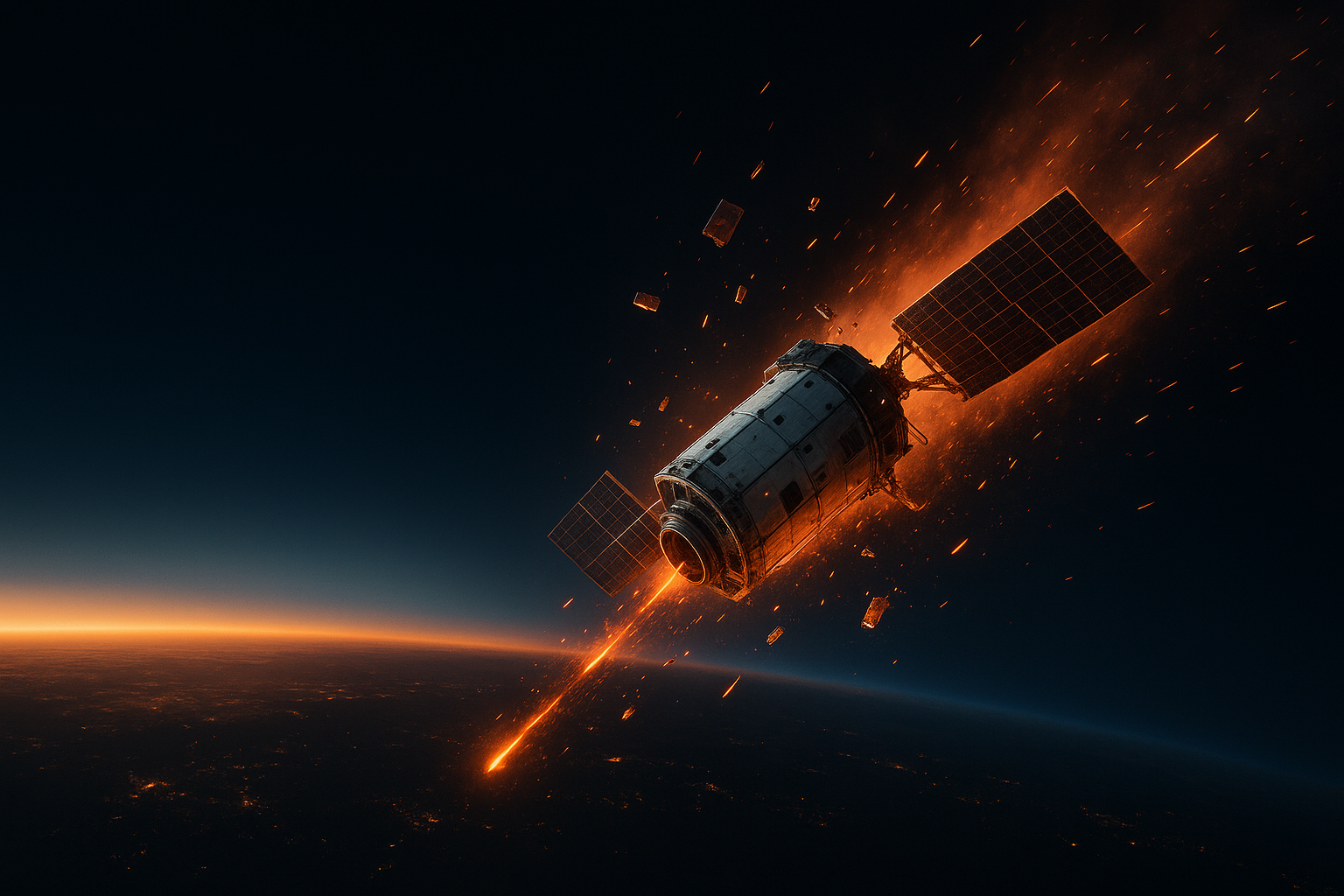
Last week, headlines flashed with news of a NASA satellite crash, stirring up concern—and curiosity—around the world. Whenever a piece of space technology unexpectedly meets Earth, it raises important questions for scientists, policymakers, and anyone intrigued by humanity's reach beyond our planet.
I find this fascinating not only because satellites are the silent backbone of modern life, but because each incident like this highlights the complex relationship between technological progress and the unpredictable forces of nature. Is this just space junk falling, or a warning from the cosmos to rethink how we manage our orbit?
What's Happening
The event in question centered around the Reuven Ramaty High Energy Solar Spectroscopic Imager (RHESSI), a NASA satellite launched in 2002 to study solar flares and coronal mass ejections. After nearly two decades of service, the spacecraft was retired in 2018, left to drift in low-Earth orbit as most satellites eventually are.
- Date of Crash: RHESSI re-entered Earth's atmosphere on April 19, 2024.
- Location: The satellite is believed to have largely burned up above the Northern Hemisphere, with any surviving debris expected to have fallen into the ocean.
- Context: NASA tracked the decay of RHESSI's orbit for years, and experts had projected an uncontrolled re-entry for some time. Such events are not rare, with over 100 tons of space debris re-entering every year.
- Safety: NASA stated there was a very low chance of any parts reaching land or posing a hazard to humans.
Here are some notable details:
- The main cause of re-entry: gradually increasing atmospheric drag slowed the satellite, bringing it down.
- Most of RHESSI's 270 kg mass burned up due to friction with air—but heavy components, like titanium or stainless steel, sometimes survive.
- No injuries, property damage, or hazardous material releases have been reported as a result of this event.
Why This Matters
Although the RHESSI event passed quietly, it spotlights an issue growing by the year: space debris management. The sheer number of retired satellites and defunct rocket stages orbiting Earth represents a rising collision risk—to astronauts, active satellites, and even people on the ground.
As commercial and governmental launches accelerate, the challenge of tracking these objects, predicting their fall, and ensuring public safety becomes urgent. Every NASA satellite crash is a test of our readiness—and a chance to improve.
This also brings up deeper questions about environmental stewardship. Earth's orbit is becoming a new frontier for sustainability, where the consequences of neglect can echo globally.
Different Perspectives
NASA and Space Agencies
NASA emphasizes that re-entries of satellites like RHESSI are well-predicted and low-risk, largely thanks to stringent safety protocols. They argue these rare crashes aren't cause for panic but reflect inevitable aging of early space infrastructure.