
Introduction
The northern lights, or aurora borealis, have transfixed humanity for centuries — sweeping ribbons of color that seem to dance across the night sky. Recently, excitement has swelled as aurora forecasts predict heightened displays, making this cosmic phenomenon accessible to more people than usual. For skywatchers, travelers, and anyone enchanted by natural wonders, understanding the latest aurora borealis forecast matters now more than ever.
I find this trend fascinating because it’s not just about chasing pretty lights — it’s about connecting us to celestial rhythms that stretch from the surface of the sun to our own backyards. Let’s shed light on what’s causing this buzz, who might see the show, and why the aurora feels especially magical this season.
What’s Happening
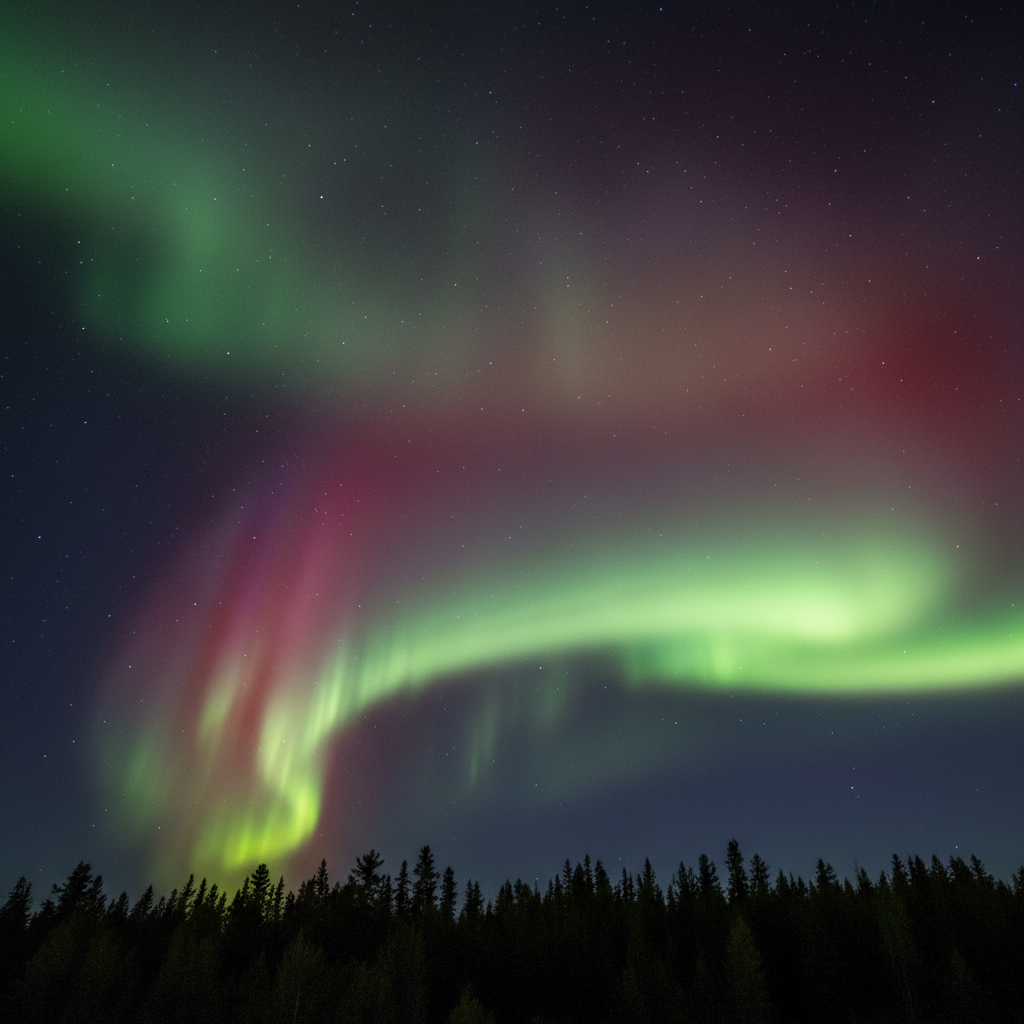
For those new to it, the aurora borealis is a luminous display caused by charged particles from the sun colliding with Earth’s atmosphere near the poles. Sometimes, solar activity spikes, sending solar storms — known as coronal mass ejections (CMEs) — hurtling our way. When these particles reach Earth, they interact with atmospheric gases, releasing the fantastical colors we see as auroras.
- Aurora forecasts are predicting unusually widespread displays due to increased solar activity.
- Recent geomagnetic storms have made it possible for the aurora to be visible much farther south than usual. Locations across the northern United States, parts of Europe, and even some lower latitudes have reported sightings.
- Space weather services like NOAA, the Space Weather Prediction Center, and real-time forecast apps have seen a surge in interest as people hope to catch a view.
- Strong solar storms can also affect satellites, radio signals, and power grids — making accurate forecasts important for infrastructure, not just skywatchers.
The solar cycle, which peaks every 11 years, is currently heading toward its maximum — meaning 2024 could be one of the best years in over a decade to witness the aurora borealis.
Why This Matters
Catching the aurora isn’t just a whimsical pursuit; it ties directly to our planet’s relationship with the sun. These vibrant displays are a signal that our magnetic shield is interacting with cosmic forces — a reminder of our place in the solar system.
The heightened forecasts have spurred travel interest, with northern destinations experiencing a surge in bookings. For communities at higher latitudes, the aurora isn’t just spectacle — it’s woven into culture, heritage, and livelihood. On a practical level, accurate forecasts help prepare essential infrastructure for possible disruptions caused by geomagnetic storms.
For many, chasing the aurora borealis is about wonder and connection, offering a rare and humbling encounter with the universe.
Different Perspectives
Astronomers and Space Scientists
Experts see this period as a critical opportunity to study solar-terrestrial interactions in real time. Monitoring aurora activity helps scientists refine models of space weather and safeguard satellite communication.



